H. P. Lovecraft
Howard Phillips Lovecraft · August 20, 1890 – March 15, 1937 · American writer of weird and cosmic horror
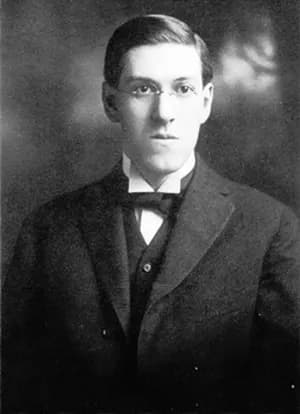
Who he was
Howard Phillips Lovecraft was an American author of weird fiction, horror, and early science fiction. He is remembered for a body of stories that stress cosmicism — the idea that humanity is a small, fragile part of an indifferent universe — and for the shared motifs and entities later grouped under the name Cthulhu Mythos.
He was little known as a commercial author in his lifetime and lived modestly in New England. After his death, readers, editors, and scholars revived his work; today he is widely cited as a central figure in twentieth-century supernatural horror.
Birth, childhood, and early influences
Lovecraft was born on August 20, 1890, in Providence, Rhode Island, where he would spend most of his life. His father was institutionalized when Lovecraft was very young and died years later; he was raised largely by his mother and the extended Phillips family. His grandfather encouraged reading and storytelling, including Gothic-flavored tales that left a deep mark on his imagination.
As a child he read widely — classical myth, the Arabian Nights, Poe, and illustrated editions such as Doré's The Rime of the Ancient Mariner. Around 1902 he became passionate about astronomy, which shaped his sense of vast space and human smallness. Ill health and family losses shadowed his youth; nightmares and a precocious inner life later surface in his fiction.
Why and how he began to write
Lovecraft wrote poetry and juvenilia from an early age. In his teens the family's finances worsened after his grandfather's death; stress and nervous illness disrupted his schooling. He did not graduate high school or attend university, but he never stopped reading or composing.
He found community in amateur journalism— especially the United Amateur Press Association — where he debated literature, politics, and language, and published essays and verse. That network gave him discipline, correspondents, and an audience when commercial success was still out of reach. Fiction gradually took center stage: early tales such as "The Alchemist" and "The Beast in the Cave" led to more confident work.
Literary influences
Lovecraft called Edgar Allan Poea towering influence; Poe's unity of mood and cosmic unease echo throughout his early prose. In 1919 he discovered Lord Dunsany; the ornate, dreamlike style of Dunsany's fantasies shaped stories such as "The White Ship" and "The Cats of Ulthar" and helped crystallize Lovecraft's Dream Cycle phase.
He also drew on Arthur Machen, Algernon Blackwood, and the broader tradition of Gothic and decadent literature. Science — astronomy, geology, biology — supplied metaphors for the alien and the incomprehensible. New England history and geography became "Lovecraft Country": renamed towns and colleges that feel uncannily real.
Publishing: pulps, letters, and the Mythos
A sharp letter to the magazine Argosy in 1913 drew attention to his critical voice and helped pull him further into speculative-fiction circles. Through amateur journals he circulated stories and met peers; professionally,Weird Tales became his most important market, though editors sometimes rejected or trimmed his work.
In the early 1920s he began the interconnected tales of cosmic entities, forbidden books, and collapsing perspective that readers later labeled the Cthulhu Mythos(Lovecraft himself joked about "Yog-Sothothery"). Stories such as "The Nameless City," "The Call of Cthulhu," and "The Colour Out of Space" refined his voice: learned narrators, cumulative dread, and hints of vast, indifferent powers.
Marriage, New York, and return to Providence
In 1924 he married Sonia Greeneand moved to New York City. He admired the metropolis at first, but loneliness, money troubles, and culture shock wore him down; stories like "He" channel that exhaustion. In 1926he returned to Providence for good — the city he called home and often "I AM PROVIDENCE" in his letters.
The late 1920s and 1930s produced some of his most famous fiction, including The Case of Charles Dexter Ward, At the Mountains of Madness, The Shadow over Innsmouth, and The Shadow Out of Time. He supported himself poorly from fiction; revision, ghostwriting, and correspondence filled much of his time. The "Lovecraft Circle" — friends such as Robert E. Howard and Clark Ashton Smith — traded ideas and cross-pollinated settings through voluminous letters.
Final years and death
Lovecraft's health declined in the mid-1930s. He avoided doctors for a long time; when examined, he was found to have terminal cancer. He died on March 15, 1937, in Providence, aged 46, and was buried in Swan Point Cemetery. A modest headstone erected later by fans quotes his line "I AM PROVIDENCE."
Legacy
August Derleth and others kept Lovecraft in print through Arkham House; academic and popular interest grew from the 1970s onward. Writers from Stephen King to countless game designers and filmmakers have acknowledged his influence. Scholars debate his philosophy, politics, and prejudices; readers continue to grapple with the power of his atmosphere and the limits of his worldview.
On Strangeflix you can read public-domain Lovecraft texts in a calm, adjustable reader — the same stories that helped define modern weird horror.
Further reading
This page is a concise overview for readers. For dates, bibliography, and scholarly detail, see the H. P. Lovecraft article on Wikipedia and references linked there.